
Graphology

WHAT IS GRAPHOLOGY
The origins of this field may be traced all the way back to the Chinese in the fourth century BC, who uttered several expressions that are still used in today's analysis.
"Handwriting invariably tells whether it comes from a high intellect or from a vulgar person," wrote Chinese scholar Kuo Jo-Hsu in the fourth century BC.
"Each stroke of writing conveys a complete life," says Okakura, a Japanese philosopher.
"Writing is a sign of speech, and the latter a symbol of mental experience," Aristotle (384-322 BC) said of the relationship between writing and thinking.
Writing was considered sacred by Egyptian civilizations. Graphology was invented by the Romans and has since been utilized by several civilizations and cultures to determine the substance of things.
History
The genuine "Father of Graphology," Abate Jean Hippolyte Michon (1806-1881), was the one who coined the word "Graphology," was born in France (Graphologist Day is celebrated in his honor on November 21st), and founded La Societé de Graphologie de Paris in 1871.
Modern Graphologist Jules Crépieux-Jamin (1859-1940) created the theory that argues that trait analysis determines the singularity of the individual as a whole, which includes personality, character, and unconscious thought processes.
Ludwig Klages, a German philosopher who lived from 1872 to 1956, was the first to apply Gestalt psychology to Graphology. He coined the term "formniveau," or "shape level," to describe the overall quality of writing. "Writing and Character" was his first book (1917).
Girolamo Moretti was a Franciscan monk who lived from 1879 until 1963. He wrote "Manuale di Grafologa" in 191.
Max Pulver (1889-1952) is credited with bringing psychoanalysis to graphology and developing the notion of space symbolism.
It is feasible to examine writing patterns that reveal a person's psychological condition using Graphological Analysis.
Since the beginning of time, graphology has been a source of debate. Those in favor of this method claim that the brain sends messages to the muscles that allow them to write. "What writes is the intellect, not the hand."
A graphologist is a person who studies handwriting and understands how different aspects of it interact. It is feasible to create a psychological report by describing letters and analyzing signs, validating behavior in the cognitive, emotional, and social domains.
GRAPHO-ANALYSIS
Discipline
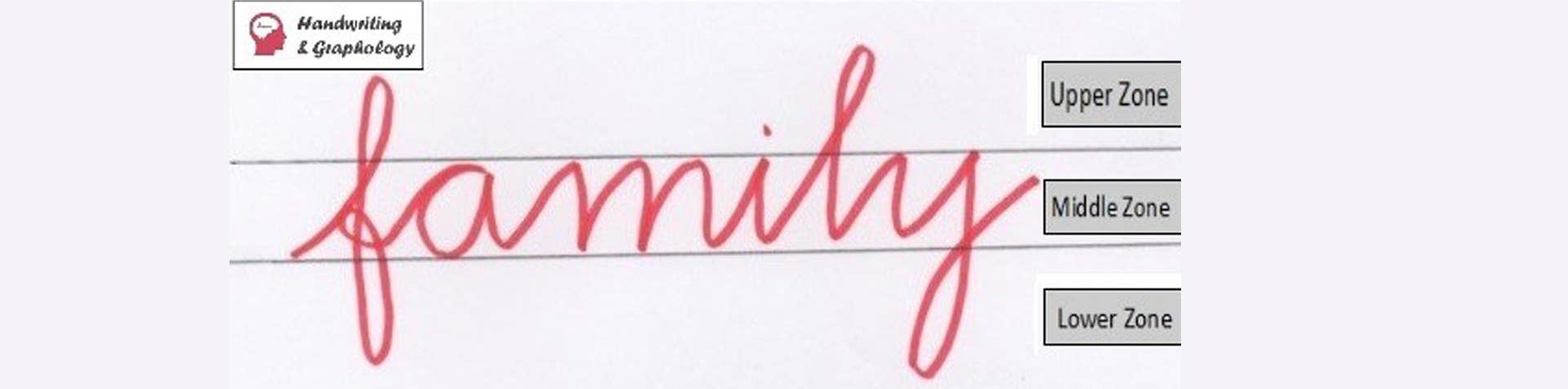
Graphological Schools or Movements include the following:
- The French school of graphology defines graphic signs and letters in isolation, but the way a person writes the "t" bar, the "g" curl, or the letter "a" does not represent their personality.
- The German school, which has a gestaltic and integral vision of graphism and understands writing as a unit, studies the traits (letters), shapes, movements, and pace of the writer and, through these, discovers the writer's nature, character, personal subconscious, and emotions, and detects whether there are fixations in the phases of psychosexual development, and analyses the evolution of writing over time.
- The Emotional school, which is based on the study of the changes that writing undergoes as a result of the writer's emotional changes and incorporates the concept of "Lapsus Calami" to such changes that correspond to "Lapsus Linguae" in Freudian slips, has representatives such as Rafael Scherman, who founded it in Germany in 1912, and Kurt Honroth, a German settled in Argentina.
It is necessary to understand the Swiss symbolic school and Max Pulver's Symbolism of Space in order to comprehend graphology. Pulver, a famous investigator born in Berne in 1889, wrote a series of literary and philosophical works that revealed the symbolic differences in writing before turning his attention to graphology and psychology. This researcher points out that we have carried ancient symbols inside ourselves from the origin of time. Mental connections that we utilize on a regular basis to steer us without us even realizing it. Some connections are made by humans, such as:
- Up, the sky, God, daytime, light, spirituality.
- Down, nighttime, darkness, depth, instincts.
- Right, getting together, the future, extroversion, achievements, the father.
- Left, yesterday, the past, the beginnings, the mother, fear of the ego to continue, introversion.
- Center, present, today, immediate events, me, self-control.
These signals that we unconsciously expose in the graphic space correspond to our actions. The white sheet of paper, as well as the printed language, has the symbolic of space. A varied interpretation will occur depending on the portion of the white sheet of paper was chosen to write or draw on.
Zone

We can identify the following places using space symbolism:
- The "EGO" of Freud's psychological system theory, which symbolizes the principle of reality and the present, is displayed in the Central Area. It relates to the Ego's emotive characteristics in connection to oneself at the present moment. When people write in this zone a lot, it's assumed that they need to be the "center" for everyone else.
- Spirituality, idealism, imagination, and intelligence are all represented by the Superior Area. In his psychological system theory, Sigmund Freud refers to it as "SUPEREGO."
- The Inferior Area reflects the personality's instinctual side, as well as the motor, biological, and tangible aspects. This is referred to as ID by Freud.
- The immature "EGO" is symbolised by the Left Area, which represents regressive characteristics of personality, unable to disengage from the mother's womb. Primary ties, the individual's past, introversion, and introspection are all examined here.
- The Right Area is about persons who have been able to separate themselves from their mothers and have developed a mature "EGO." It pertains to one's emotional reactions to the world, as well as communication and the future.
Example

When examining a text, we will look to see if the handwriting is aligned to the right (has a large left margin or a small right margin) or to the left (has a large left margin or a small left margin).
When positioned to the right, it denotes development into the future, toward people, a person who takes initiative, and a preference for extroversion.
If the text is shifted to the left (owing to a large right margin), we get the impression that the person is clinging to the mother's womb, the family of origin, the past, and the predominance of introversion.

It might be an indication of egocentrism and narcissism if the text is positioned in the center, in the center region. The signature of the individual attests to this (if placed in the center).
Individuals that are idealistic, spiritual, intellectually active, and inventive are represented in regions with extremely superior text growth (with a lot of text towards the top sections). We may investigate the individual's reflections and dreams there.
Individuals who live in areas with a lot of lower text development are sensual, practical, realistic, concerned about their own body's care, and looking for rapid gratification.
Everything on a page is imbued with the significance of space. From the interplay between written and empty spaces to the particular descriptions of the letters. Behavior is represented in writing, according to the symbolism of graphic space.
Writing, according to graphologists, is a pictorial record of the writer, not only written text. Individuals exhibit their intelligence, sensitivity, inclinations, emotions, and reactions in their handwriting movements, in other words, they express their personality.
BENEFITS AND APPLICATIONS OF GRAPHOLOGY
Graphology is a technique for getting to know ourselves and those around us. Graphological analysis may be used in a variety of ways. The ability to learn more about individuals using a seemingly simple procedure, such as the examination of handwriting features, allows graphology to be applied to a wide range of domains of knowledge.
 Psychology
The examination of the changes that writing undergoes during therapy provides for the understanding of a patient's progress, as graphical symbols vary their appearance for the same individual as their psychism evolves.
 Clinical Medicine
 Education
It also aids in the verification of each student's growth and regression through the methodical analysis of writing, as well as the detection of potentially dangerous circumstances.
Different aspects of children with difficulties in paying attention, dysgraphia, social behavior disorders such as shyness, isolation, aggressiveness, and affective disorders, among others, are treated through Graphotherapy, which is a graphical psychotherapy treatment and also an invaluable tool that educational psychologists rely on. Through adequate pictorial exercises for rectification, it is possible to change unfavorable qualities.
Graphologists will be used in the selection process for adverts on job applications that demand a handwritten presentation.
The study of employee handwriting allows Graphology to transfer human resources appropriately within the company's organizational hierarchy.
There is couple, partner, and public relation compatibilities in premarital orientation.
GRAPHOLOGY IN MODERN DAYS
- Because of the way strokes are done or how they link one to another, it has been demonstrated that some letters are more important than others, confirming what has been evaluated in the text. The letters g, t, a, d, r, m, and I are explored in particular.
- The signature analysis is another key aspect of graphology. The most genuine manifestation of a person's individuality is their signature. Keep in mind, however, that a signature alone may give very little information. To arrive at valid readings, the text and the signature must be evaluated together.
- Writing is a method of interacting with the rest of the world. It is the mechanism by which we present ourselves to one another; as a result, text serves as a type of social visit card, indicating our attitude and conduct toward others.
- Text, from a psychological standpoint, symbolizes the "social ego," or the way an individual displays himself in society, including his social and professional contexts. The signature reveals the individual's "intimate ego," or how he views himself, his aspirations, complexes, emotions of superiority or inferiority, dominating qualities, and character. We identify the name, which represents his genuine ego, the last name, which represents his family image, and the signature itself, which is the scribbling that generally goes with the signature and represents the boundary where the intimate ego is put.
- Relevant inferences will be drawn from the comparison of the text and the writer's signature.
- Like Matilde Ras says: “Writing is the enchanted mirror where the mysterious face of the soul is reflected.”
- Graphology is a fascinating subject that, when combined with psychology, allows us to explore the depths of our existence.
@ Copyright 2021 All Rights Reserved